


The Little Mermaid

The Little Mermaid
To begin with, as we have said, it is one of the most famous and well-defined fairy tales (taking into account that in this case the fantasy comes from the underwater marine world, which is also included in the realm of magical beings), a work of genius, as we have also said, author Hans Christian Andersen. But it is not, unlike other tales by the same writer, such as The Ugly Duckling, for example, a simple tale with a linear plot; rather, we are faced with the opposite: a complex story with multiple themes and an open ending.
Among the themes distilled from this work, we can list, without wishing to be dogmatic, love and the desire to escape the life we lead into another, unknown, and different existence. It also provides an "open" ending that is neither happy nor tragic, quite the opposite. Therefore, in the eyes of this publication, the work would be classified as a tragicomedy. A series of sub-themes hover throughout the work, which we do not delve into in depth so that the reader can discover and enumerate them.
Ultimately, the work, after a study and exploration of the fate of mermaids and other aquatic creatures, establishes all those elements that were "swimming" around these beings but that no one had previously seen fit to incorporate into a literary work.
The Little Mermaid has had a multitude of adaptations and manifestations after its publication, for example the bronze sculpture in Copenhagen, in addition to the animated film from the studios created by Walt Disney (when he himself had already died some time ago), in which they chose to include a happy ending and stripped away the tragicomic essence of the original work, in addition to another Japanese animated film, among other adaptations.


Featured links in works

 Latest pictures about The Little Mermaid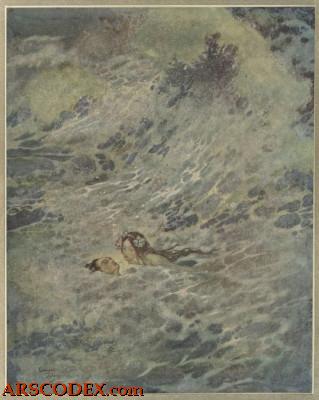
The Little Mermaid old illustration by Edmund Dulac - February, 22; 2026
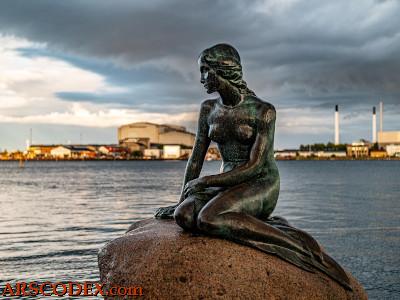
The little mermaid sculpture in Copenhagen by Edvard Eriksen - August, 10; 2025